Strength Stretching and MFR in Batumi: How I Use Them
Active stretching and foam rolling are different tools. Here is how I decide where they belong in a session and why painful pressure is not the aim.
 Author: Lyudmila Overkovskaya
Personal fitness trainer in Batumi
After a strength session, should you stretch, use a foam roller or simply finish? I choose according to the purpose of the session and how you feel. Strength-based stretching and myofascial release, often shortened to MFR, are tools I use selectively. Sometimes a short walk and a conversation about the session are enough.
I am Lyudmila Overkovskaya, and I have coached for more than 15 years. Here I explain what I mean by strength stretching, how I introduce rolling and why I do not ask you to work through pain. The first useful distinction is between actively controlling a movement and applying pressure with equipment.
What strength stretching means in my programme
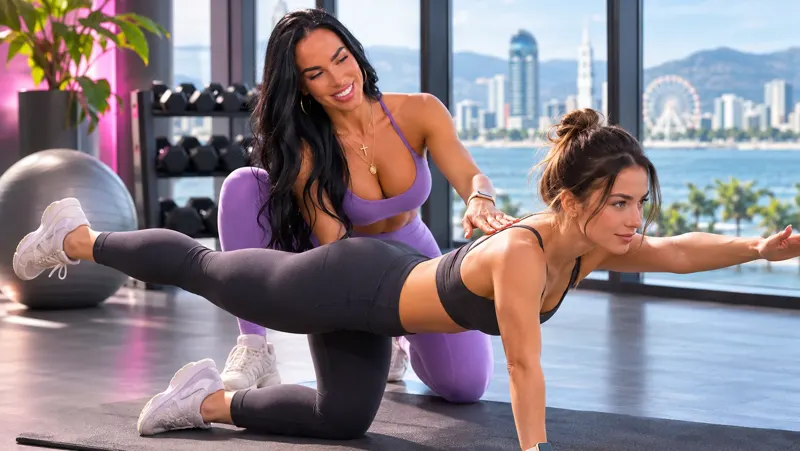
I use this term for work that asks you to control your available range and muscular effort. That might be a slow movement at a stable support or an accessible position held with a little active effort. I do not begin by asking you to copy a deep pose from a photograph.
For example, we might try a shallow supported lunge. You can use your hands for balance, move only as far as feels manageable and return deliberately. I want you to be able to stop at any point. If balance takes all your attention, I add support; if the position hurts, we reduce the range or change the exercise.
Depth is only one detail
It is easy to compare your flexibility with someone beside you. Their range does not tell us how well your session is going. I watch whether you can control the position, breathe comfortably and leave it without rushing. A smaller range that you understand can be a more useful starting point than a deeper, confusing position.
Try recording a specific observation. Perhaps you needed a firm grip on the support previously and now need only a light touch. Or you can repeat the movement without another explanation. Those details help me choose the next task. They also give us something to review beyond how low you managed to go.
How I use the term MFR
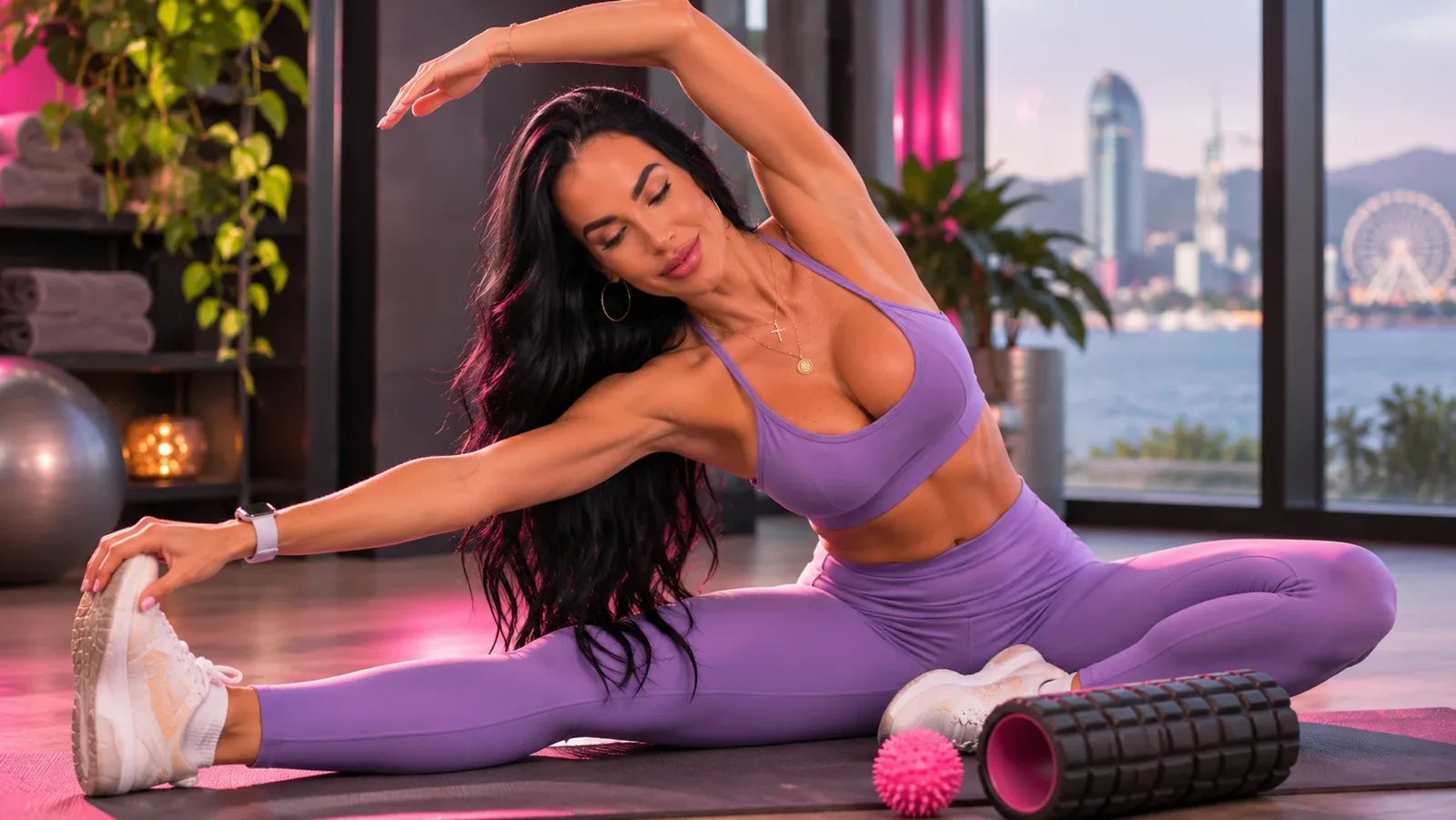
MFR stands for myofascial release. In my fitness sessions, I use the name for gentle self-directed work with a roller or ball. The term is not an instruction to break up a painful area, press as hard as possible or treat an unexplained symptom yourself. I choose pressure that you can control comfortably.
We might briefly try a roller on an accessible part of a muscle and then discuss the experience. If you dislike the format, it does not have to remain in the programme. I want you to have a stable position and an easy way to reduce pressure or remove the roller when needed.
Start with adjustable pressure
I first show a position with enough support from your hands or feet. That makes it easier to control how much weight reaches the roller. We then try a short, slow movement rather than searching for the most painful spot. If you are bracing yourself and waiting for it to end, I adjust the task.
I do not roll directly over joints, the front of the neck or the spine. With an injury, significant pain or medical restrictions, check whether this kind of pressure is appropriate with a qualified professional first. Rolling in a fitness session does not replace assessment or treatment when symptoms need attention.
Where these tools fit after lifting
If strength is the main purpose of a session, I protect time for the main exercises. We may finish with a small amount of familiar mobility work or comfortable rolling. A full additional flexibility session does not automatically belong after an already demanding workout just because you finally have an evening free.
I do not promise that stretching or rolling will prevent next-day soreness. I use them as optional ways to organise movement practice and explore comfortable positions. If the strength work was too demanding, we need to review that workload. Increasing roller pressure is not how I make an unsuitable session into a suitable one.
A short finishing sequence to discuss
This is an example of structure, which I adapt after meeting the person. It is not a list of exercises that everyone must complete after lifting.
- Easy walking to move towards the end of the session.
- One familiar supported movement through a comfortable range.
- A few slow repetitions without trying to deepen the position.
- Optional brief rolling on an accessible part of a muscle.
- A check-in and a note about what felt useful.
For an introduction, we can choose just one element. You might learn the supported lunge and leave rolling for another appointment. That makes it easier to understand what you practised and how it felt. I add more only when the basic version is clear and there is a reason for the extra work.
Taking familiar work into independent practice
Write down a few cues for a movement you already know: where the support goes, what range you use and when to stop. If the exercise becomes confusing without constant instruction, I choose a simpler version for independent practice. You should be able to set it up without guessing what the session notes mean.
You do not need to collect equipment to begin. Try one roller under guidance and check that you can control the pressure comfortably. Buying the hardest roller is not a required progression. If rolling feels unpleasant, we can leave it out and keep familiar mobility exercises that suit you better.
What I ask you to notice
During the exercise, notice whether you can breathe comfortably and leave the position on your own. Afterwards, a short note is enough: comfortable, too demanding or needs a different support. Repeatedly testing your deepest range throughout the day is unnecessary. Consistent feedback at the next appointment gives us a clearer basis for decisions.
If new pain or unusual symptoms appear, stop and seek appropriate medical advice. Do not try to press harder to remove the sensation. My role is to select exercise within the scope of coaching, while symptoms that need assessment should be handled by the appropriate professional. Tell me about any restrictions before we choose the next version.
A practical checklist
- I understand why this method was chosen.
- I can reduce the range or pressure myself.
- I do not use pain as proof of effectiveness.
- I do not substitute rolling for rest or a workload review.
- I use familiar movements when practising independently.
I offer in-person training in Batumi, currently at Fitness Academy, 18A Pirosmani St. I speak Russian, English and Ukrainian. You do not need to be flexible before we meet; we start with movements appropriate to your preparation.
To explore strength stretching and MFR in a session, book through the form on the site or message Instagram @overkovskaja. Tell me your goal and experience, and we can choose a clear starting point.
Key takeaways
What do you mean by strength stretching?
I use the term for exercises that involve controlling movement and effort through an accessible range. I adapt the position and workload to your preparation.
Should myofascial release hurt?
I choose comfortable pressure rather than asking you to tolerate pain. We stop if there is pain, numbness or an unusual sensation.
Do I need a foam roller after every workout?
No. I decide whether to use one according to the session, available time and your response; it is not a compulsory finish.